How accessible is Muscat with limited mobility or a wheelchair?
5 min read
Muscat can work with limited mobility, but not as a spontaneous walking day. For most parties who need the route adapted, the Oman: Private Muscat City Tour With Pick-up/Drop-off is a better starting point than a fixed group circuit. It lasts 4.5 hours, costs €87.88 per group of up to four and has 4.4 stars from 253 reviews. That price does not prove the vehicle is wheelchair accessible. Before booking, ask about steps, boot dimensions, transfer assistance and whether a wheelchair can remain assembled. If the answers are vague, arrange an accessible vehicle separately and visit the National Museum independently.
See availability and prices for the private Muscat city tour
The easiest substantial stop
The National Museum is the strongest anchor for an accessible half-day. Oman’s official tourism site labels it wheelchair accessible and lists accessible areas, lifts, toilets, a café and parking. It also states that visitors with disabilities and their companions receive free admission. Because the galleries cover Oman’s history and maritime culture, this is not merely a comfort stop; it replaces several hard-to-reach heritage sites with a meaningful indoor visit.
Ask the museum directly if you need a loan wheelchair, a particular toilet layout or assistance beyond step-free circulation. “Wheelchair accessible” describes a broad category, not every individual’s requirements.
Mutrah is flatter than the forts, but not effortless
The Corniche offers a largely level waterfront route and lets you choose your own turning point. Mutrah Souq is more demanding: it can be crowded, its passages are not uniformly spacious and a slow group may need more time than a standard tour allows. Visit early, keep the distance short and agree on a pickup point that the driver can actually reach.
Do not treat Mutrah Fort’s accessibility label as permission to plan the whole visit. The official listing warns that access is limited in some sections, and the attraction climbs a rugged hill. The view and upper paths are a different question from reaching the entrance. For a no-step plan, admire the fort from the Corniche rather than making it the day’s test.
The mosque needs specific questions
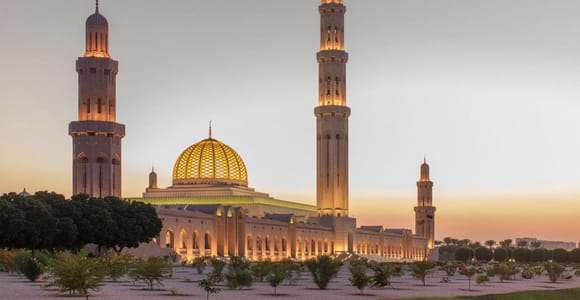
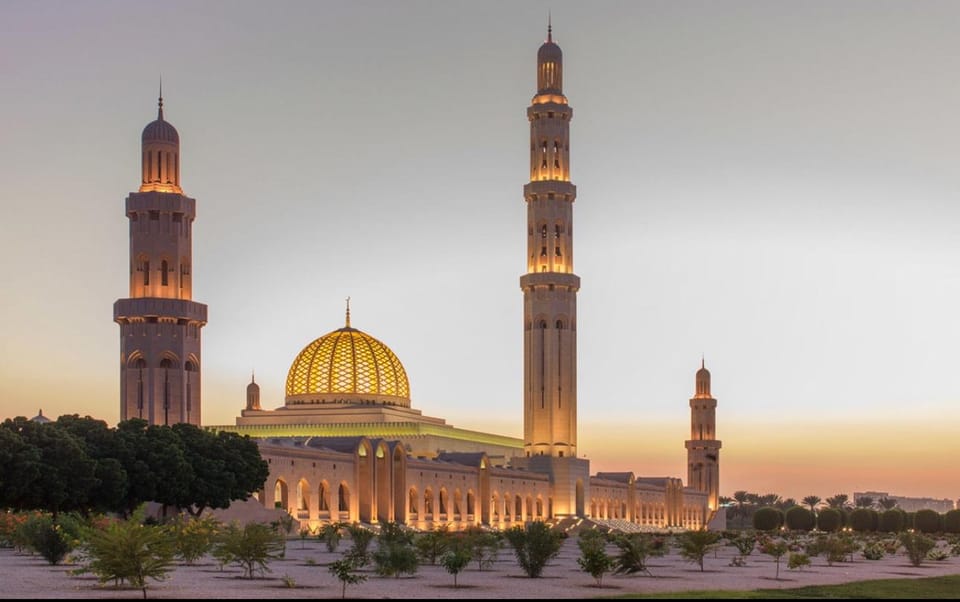
The Sultan Qaboos Grand Mosque has broad paved spaces, but distance matters as much as steps. Ask about the drop-off point, the route to the visitor entrance, available wheelchairs, seating and access to the prayer hall. Dress requirements still apply. A folding stool, mobility aid or companion arrangement should be cleared with staff rather than assumed.
Old Muscat can be handled as a vehicle-based sequence: Al Alam Palace from the forecourt, the museum, then exterior views of Al Jalali and Al Mirani. This avoids pretending that every historic structure is visitable.
Questions to send before paying
Tell the operator whether the traveller transfers independently, uses a manual or powered chair, and can manage any steps. Request the vehicle make and model, door height, storage dimensions, number of transfers and the longest walking section. Ask whether the quoted pickup includes your hotel or cruise meeting point. These answers matter more than the word “private”.
The tour is a poor choice for a powered chair that cannot be folded unless the operator confirms a suitable vehicle. It is also unnecessary for someone happy to take an accessible taxi directly to the museum and spend the rest of the day on a short Corniche section.
Our recommendation
Choose the private Muscat city tour with pickup and drop-off when the operator confirms the exact vehicle and agrees to centre the itinerary on the National Museum, Old Muscat forecourt and a manageable piece of Mutrah. Skip it if accessibility answers remain generic. A shorter independent museum visit is a better day than paying for four and a half hours of unsuitable transfers.